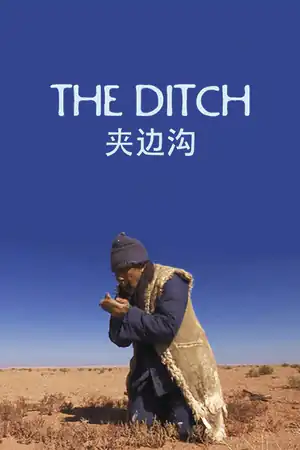
The Ditch 2011
夹边沟
The film focuses on the suffering of Chinese who were imprisoned in a forced labor camp called Jiabiangou in the Gobi Desert in winter 1960 under Mao Zedong on the grounds that they were "rightist elements". The film tells of the harsh life of these men, who coped with physical exhaustion, extreme cold, starvation and death on a daily basis.
Cast


Vocabulary
Filter the words you want to study before watching.
| 最 㝡 | most; the most; -est (superlative suffix) | |
| 太 太 | highest; greatest; too (much); very; extremely | |
| 出 出 | to go out; to come out; to occur; to produce; to go beyond; to rise; to put forth; to happen; (used after a verb to indicate an outward direction or a positive result); classifier for dramas, plays, operas etc | |
| 天 天 | day; sky; heaven | |
| 等 等 | class; rank; grade; equal to; same as; to wait for; to await; et cetera; and so on; et al. (and other authors); after; as soon as; once | |
| 两 兩 | two; both; some; a few; tael, unit of weight equal to 50 grams (modern) or 1⁄16 of a catty 斤 (old) | |
| 多 多 | many; much; too many; in excess; (after a numeral) ... odd; how (to what extent) (Taiwan pr. [duó]); (bound form) multi-; poly- | |
| 用 用 | to use; to employ; to have to; to eat or drink; expense or outlay; usefulness; hence; therefore | |
| 年 年 | year | |
| 现在 現在 | now; at present; at the moment; modern; current; nowadays | |
| 真 真 | really; truly; indeed; real; true; genuine | |
| 里 裡 | lining; interior; inside; internal; also written 里 | |
| 中 中 | within; among; in; middle; center; while (doing sth); during; (dialect) OK; all right | |
| 从 從 | from; through; via; to follow; to obey; to engage in (an activity); never (in negative sentence); (Taiwan pr. [zòng]) retainer; assistant; auxiliary; subordinate; related by common paternal grandfather or earlier ancestor | |
| 下 下 | down; downwards; below; lower; later; next (week etc); second (of two parts); to decline; to go down; to arrive at (a decision, conclusion etc); measure word to show the frequency of an action | |
| 没 沒 | (negative prefix for verbs) have not; not | |
| 过 過 | to cross; to go over; to pass (time); to celebrate (a holiday); to live; to get along; excessively; too- | |
| 吧 吧 | (modal particle indicating suggestion or surmise); ...right?; ...OK?; ...I presume. | |
| 点 點 | point; dot; drop; speck; o'clock; point (in space or time); to draw a dot; to check on a list; to choose; to order (food in a restaurant); to touch briefly; to hint; to light; to ignite; to pour a liquid drop by drop; (old) one fifth of a two-hour watch 更; dot stroke in Chinese characters; classifier for items | |
| 什么 什麼 | what?; something; anything | |
| 做 做 | to make; to produce; to write; to compose; to do; to engage in; to hold (a party etc); (of a person) to be (an intermediary, a good student etc); to become (husband and wife, friends etc); (of a thing) to serve as; to be used for; to assume (an air or manner) | |
| 看 看 | to look after; to take care of; to watch; to guard | |
| 他们 他們 | they | |
| 给 給 | to; for; for the benefit of; to give; to allow; to do sth (for sb); (grammatical equivalent of 被); (grammatical equivalent of 把); (sentence intensifier) | |
| 能 能 | can; to be able to; might possibly; ability; (physics) energy | |
| 没有 沒有 | haven't; hasn't; doesn't exist; to not have; to not be | |
| 想 想 | to think (about); to think of; to devise; to think (that); to believe (that); to desire; to want (to); to miss (feel wistful about the absence of) | |
| 去 去 | to go; to go to (a place); (of a time etc) last; just passed; to send; to remove; to get rid of; to reduce; to be apart from in space or time; to die (euphemism); to play (a part); (when used either before or after a verb) to go in order to do sth; (after a verb of motion indicates movement away from the speaker); (used after certain verbs to indicate detachment or separation) | |
| 着 著 | (chess) move; trick; all right!; (dialect) to add | |
| 她 她 | she | |
| 还 還 | still; still in progress; still more; yet; even more; in addition; fairly; passably (good); as early as; even; also; else | |
| 很 很 | (adverb of degree); quite; very; awfully | |
| 来 來 | to come; (used as a substitute for a more specific verb); hither (directional complement for motion toward the speaker, as in 回来); ever since (as in 自古以来); for the past (amount of time); (prefix) the coming ...; the next ... (as in 来世); (between two verbs) in order to; (after a round number) approximately; (used after 得 to indicate possibility, as in 谈得来, or after 不 to indicate impossibility, as in 吃不来) | |
| 到 到 | to reach; to arrive; to leave for; to go to; to (a place); until (a time); up to (a point); (verb complement indicating arriving at a place or reaching a point); considerate; thoughtful; thorough | |
| 上 上 | used in 上声 | |
| 对 對 | right; correct; towards; at; for; concerning; regarding; to treat (sb a certain way); to face; (bound form) opposite; facing; matching; to match together; to adjust; to fit; to suit; to answer; to reply; to add; to pour in (a fluid); to check; to compare; classifier: couple; pair | |
| 都 都 | all; both; entirely; (used for emphasis) even; already; (not) at all | |
| 也 也 | (adverb) also; both ... and ... (before predicates only); (literary) particle having functions similar to 啊 | |
| 会 會 | can; to have the skill; to know how to; to be likely to; to be sure to; to meet; to get together; meeting; gathering; (suffix) union; group; association; (bound form) a moment (Taiwan pr. [huǐ]) | |
| 一 一 | one; single; a (article); as soon as; entire; whole; all; throughout; "one" radical in Chinese characters (Kangxi radical 1); also pr. [yāo] for greater clarity when spelling out numbers digit by digit | |
| 好 好 | good; appropriate; proper; all right!; (before a verb) easy to; (before a verb) good to; (before an adjective for exclamatory effect) so; (verb complement indicating completion); (of two people) close; on intimate terms; (after a personal pronoun) hello | |
| 人 人 | person; people | |
| 要 要 | (bound form) to demand; to coerce | |
| 说 說 | to persuade | |
| 个 個 | (classifier used before a noun that has no specific classifier); (bound form) individual | |
| 我们 我們 | we; us; ourselves; our | |
| 和 咊 | (joining two nouns) and; together with; with (Taiwan pr. [hàn]); (math.) sum; to make peace; (sports) to draw; to tie; (bound form) harmonious; (bound form) Japan; Japanese | |
| 就 就 | (after a suppositional clause) in that case; then; (after a clause of action) as soon as; immediately after; (same as 是) merely; nothing else but; simply; just; precisely; exactly; only; as little as; as much as; as many as; to approach; to move towards; to undertake; to engage in; (often followed by 着) taking advantage of; (of food) to go with; with regard to; concerning; (pattern: 就 ... 也 ...) even if ... still ...; (pattern: 不 ... 就 ...) if not ... then must be ... | |
| 这 這 | (pronoun) this; these; (bound form) this; the (followed by a noun); (bound form) this; these (followed by a classifier) (in this sense, commonly pr. [zhèi], esp. in Beijing) | |
| 他 他 | he; him (used for either sex when the sex is unknown or unimportant); (used before sb's name for emphasis); (used as a meaningless mock object); (literary) other |