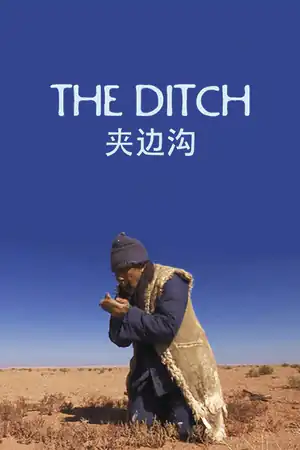
The Ditch 2011
夹边沟
The film focuses on the suffering of Chinese who were imprisoned in a forced labor camp called Jiabiangou in the Gobi Desert in winter 1960 under Mao Zedong on the grounds that they were "rightist elements". The film tells of the harsh life of these men, who coped with physical exhaustion, extreme cold, starvation and death on a daily basis.
Cast


Vocabulary
Filter the words you want to study before watching.
| 行 行 | row; line; commercial firm; line of business; profession; to rank (first, second etc) among one's siblings (by age); (in data tables) row; (Tw) column | |
| 老 老 | prefix used before the surname of a person or a numeral indicating the order of birth of the children in a family or to indicate affection or familiarity; old (of people); venerable (person); experienced; of long standing; always; all the time; of the past; very; outdated; (of meat etc) tough | |
| 出来 出來 | to come out; to appear; to arise | |
| 地方 地方 | region; regional (away from the central administration); local | |
| 告诉 告訴 | to press charges; to file a complaint | |
| 问 問 | to ask; to inquire | |
| 重要 重要 | important; significant; major | |
| 三 三 | three; 3 | |
| 东西 東西 | east and west | |
| 回 回 | to circle; to go back; to turn around; to answer; to return; to revolve; Hui ethnic group (Chinese Muslims); time; classifier for acts of a play; section or chapter (of a classic book) | |
| 请 請 | to ask; to invite; please (do sth); to treat (to a meal etc); to request | |
| 别 別 | to leave; to part (from); (literary) to differentiate; to distinguish; (bound form) other; another; different; don't ...!; to fasten with a pin or clip; to stick in; to insert (in order to hinder movement); (noun suffix) category (e.g. 性别, 派别) | |
| 这里 這裡 | here | |
| 叫 叫 | to shout; to call; to order; to ask; to be called; by (indicates agent in the passive mood) | |
| 开 開 | to open (transitive or intransitive); (of ships, vehicles, troops etc) to start; to turn on; to put in operation; to operate; to run; to boil; to write out (a prescription, check, invoice etc); (directional complement) away; off; carat (gold); abbr. for Kelvin, 开尔文; abbr. for 开本, book format | |
| 非常 非常 | very; really; unusual; extraordinary | |
| 听 听 | smile (archaic) | |
| 车 車 | car; vehicle; machine; to shape with a lathe; Kangxi radical 159 | |
| 几 几 | small table | |
| 起 起 | to rise; to raise; to get up; to set out; to start; to appear; to launch; to initiate (action); to draft; to establish; to get (from a depot or counter); verb suffix, to start; starting from (a time, place, price etc); classifier for occurrences or unpredictable events: case, instance; classifier for groups: batch, group | |
| 起来 起來 | to stand up; to get up; also pr. [qǐ lái] | |
| 月 月 | moon; month; monthly | |
| 觉得 覺得 | to think that ...; to feel that ...; to feel (uncomfortable etc) | |
| 还是 還是 | still (as before); had better; unexpectedly; or | |
| 话 話 | dialect; language; spoken words; speech; talk; words; conversation; what sb said | |
| 今天 今天 | today; at the present; now | |
| 比 比 | Belgium; Belgian; abbr. for 比利时 | |
| 快 快 | rapid; quick; speed; rate; soon; almost; to make haste; clever; sharp (of knives or wits); forthright; plainspoken; gratified; pleased; pleasant | |
| 还有 還有 | furthermore; in addition; still; also | |
| 打 打 | to beat; to strike; to hit; to break; to type; to mix up; to build; to fight; to fetch; to make; to tie up; to issue; to shoot; to calculate; to play (a game); since; from | |
| 找 找 | to try to find; to look for; to call on sb; to find; to seek; to return; to give change | |
| 新 新 | new; newly; meso- (chemistry) | |
| 吃 吃 | to eat; to consume; to eat at (a cafeteria etc); to eradicate; to destroy; to absorb; to suffer (shock, injury, defeat etc) | |
| 谁 誰 | who; also pr. [shuí] | |
| 跟 跟 | heel; to follow closely; to go with; (of a woman) to marry sb; with; compared with; to; towards; and (joining two nouns) | |
| 这些 這些 | these | |
| 地 地 | -ly; structural particle: used before a verb or adjective, linking it to preceding modifying adverbial adjunct | |
| 怎么 怎麼 | how?; what?; why? | |
| 你们 你們 | you (plural) | |
| 前 前 | front; forward; ahead; first; top (followed by a number); future; ago; before; BC (e.g. 前293年); former; formerly | |
| 家 傢 | used in 家伙 and 家俱 | |
| 后 后 | empress; queen; (archaic) monarch; ruler | |
| 事 事 | matter; thing; item; work; affair | |
| 工作 工作 | to work; (of a machine) to operate; job; work; task | |
| 走 走 | to walk; to go; to run; to move (of vehicle); to visit; to leave; to go away; to die (euph.); from; through; away (in compound verbs, such as 走); to change (shape, form, meaning) | |
| 时候 時候 | time; length of time; moment; period | |
| 知道 知道 | to know; to become aware of; also pr. [zhī dao] | |
| 小 小 | small; tiny; few; young | |
| 呢 呢 | particle indicating that a previously asked question is to be applied to the preceding word ("What about ...?", "And ...?"); particle for inquiring about location ("Where is ...?"); particle signaling a pause, to emphasize the preceding words and allow the listener time to take them on board ("ok?", "are you with me?"); (at the end of a declarative sentence) particle indicating continuation of a state or action; particle indicating strong affirmation | |
| 再 再 | again; once more; re-; second; another; then (after sth, and not until then); no matter how ... (followed by an adjective or verb, and then (usually) 也 or 都 for emphasis) |