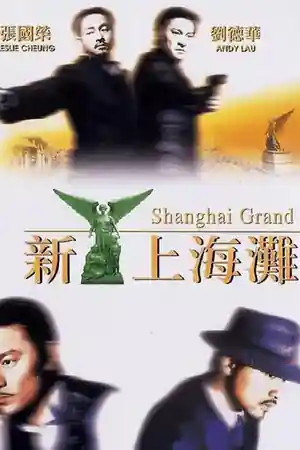
Shanghai Grand 1996
新上海滩
Hui Man Keung is washed up on a beach near Shanghai. He is taken in by Ding Lik, a kindly beggar who is in love with Fung Ching Ching, the daughter of a prominent gangster. It isn't long before Ding Lik rises through the underworld ranks to become one of the city's most powerful gangsters.
Vocabulary
Filter the words you want to study before watching.
| 为了 為了 | for; for the purpose of; in order to | |
| 发生 發生 | to happen; to occur; to take place; to break out | |
| 希望 希望 | to hope; a hope; a wish | |
| 种 種 | seed; species; kind; type; classifier for types, kinds, sorts | |
| 死 死 | to die; impassable; uncrossable; inflexible; rigid; extremely; damned | |
| 开始 開始 | to begin; beginning; to start; initial | |
| 需要 需要 | to need; to want; to demand; to require; needs | |
| 时 時 | o'clock; time; when; hour; season; period | |
| 就是 就是 | exactly; precisely; only; simply; just; (used correlatively with 也) even; even if | |
| 被 被 | quilt; to cover (with); (literary) to suffer (a misfortune); used to indicate passive voice (placed before the doer of the action like "by" in English passive-voice sentences, or, if the doer is not mentioned, before the verb); (since c. 2009) (sarcastic or jocular) used to indicate that the following word should be regarded as being in air quotes (as in 被旅游 to "go on a trip", for example) | |
| 把 把 | to hold; to grasp; to hold a baby in position to help it urinate or defecate; handlebar; classifier: handful, bundle, bunch; classifier for things with handles; (used to put the object before the verb: 把 + {noun} + {verb}) | |
| 完事 完事 | to be finished (with sth) | Xiehouyu |
| 开心 開心 | to feel happy; to rejoice; to have a great time; to make fun of sb | Xiehouyu |
| 够 夠 | enough (sufficient); enough (too much); (coll.) (before adj.) really; (coll.) to reach by stretching out | Colloquialism |
| 挺 挺 | straight; erect; to stick out (a part of the body); to (physically) straighten up; to support; to withstand; outstanding; (coll.) quite; very; classifier for machine guns | Colloquialism |
| 拉 拉 | to pull; to play (a bowed instrument); to drag; to draw; to chat; (coll.) to empty one's bowels | Colloquialism |
| 巴黎 巴黎 | Paris, capital of France | Proper Noun |
| 黄埔 黃埔 | Huangpu District, Guangzhou; Whampoa (old transliteration); Guangdong Harbor | Proper Noun |
| 黄浦 黃浦 | Huangpu River, major river flowing through Shanghai, dividing the city into Puxi (west of the river) and Pudong (east of the river); Huangpu, the most central of Shanghai's districts | Proper Noun |
| 贵姓 貴姓 | what is your surname?; (May I ask) your surname? | Proper Noun |
| 见过 見過 | seen | |
| 万岁 萬歲 | Long live (the king, the revolution etc)!; Your Majesty; His Majesty | |
| 大只 大隻 | big | |
| 知道了 知道了 | OK!; Got it! | |
| 刘 劉 | surname; kill, destroy | |
| 斧头 斧頭 | ax; hatchet | |
| 带走 帶走 | to carry; to take away | |
| 交出 交出 | to hand over | |
| 一定要 一定要 | must | |
| 两句 兩句 | (say) a few words | |
| 长得 長得 | to look (pretty, the same etc) | |
| 上街 上街 | to go onto the streets; to go shopping | |
| 大全 大全 | comprehensive collection | |
| 让开 讓開 | to get out of the way; to step aside | |
| 今晚 今晚 | tonight | |
| 做完 做完 | to finish; to complete the task | |
| 什么时候 什麼時候 | when?; at what time? | |
| 不一样 不一樣 | different; distinctive; unlike | |
| 还嘴 還嘴 | to retort; to answer back | |
| 有份 有份 | to have a share of (responsibility etc); to be concerned; to be involved | |
| 带回 帶回 | to bring back | |
| 知会 知會 | to inform; to tell; to notify; notification | |
| 起头 起頭 | to start; at first; beginning | |
| 难闻 難聞 | unpleasant smell; stink | |
| 操 撡 | conduct, run, control, manage | |
| 得很 得很 | (after an adjective) very | |
| 快当 快當 | quick; rapid | |
| 每次 每次 | every time | |
| 在身 在身 | to possess; to be occupied or burdened with (work, a contract, a lawsuit) | |
| 不带 不帶 | not to have; without; un- |