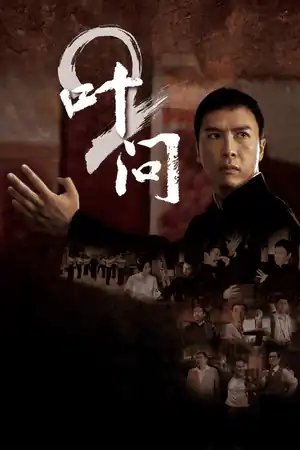
Ip Man 2 2010
叶问2
Having defeated the best fighters of the Imperial Japanese army in occupied Shanghai, Ip Man and his family settle in post-war Hong Kong. Struggling to make a living, Master Ip opens a kung fu school to bring his celebrated art of Wing Chun to the troubled youth of Hong Kong. His growing reputation soon brings challenges from powerful enemies, including pre-eminent Hung Gar master, Hung Quan.
Cast


Vocabulary
Filter the words you want to study before watching.
| 真心 真心 | sincere; heartfelt | |
| 砸 砸 | to smash; to pound; to fail; to muck up; to bungle | |
| 罗 羅 | gauze; to collect; to gather; to catch; to sift | |
| 不知 不知 | not to know; unaware; unknowingly; fig. not to admit (defeat, hardships, tiredness etc) | |
| 而已 而已 | that's all; nothing more | |
| 以 㕥 | abbr. for Israel 列 | |
| 之 之 | (possessive particle, literary equivalent of 的); him; her; it | |
| 手下留情 手下留情 | lit. start off leniently (idiom); please do not be too strict with me; Do not judge me too harshly.; Look favorably on my humble efforts. | Idiom |
| 跃跃欲试 躍躍欲試 | to be eager to give sth a try (idiom) | Idiom |
| 勉为其难 勉為其難 | to tackle a difficult job (idiom); to do sth reluctantly | Idiom |
| 视死如归 視死如歸 | to view death as a return home; to not be afraid of dying; to face death with equanimity (idiom) | Idiom |
| 不费吹灰之力 不費吹灰之力 | as easy as blowing off dust; effortless; with ease | Idiom |
| 堂堂正正 堂堂正正 | displaying strength and discipline; impressive; upright and frank; square | Idiom |
| 一模一样 一模一樣 | exactly the same (idiom); carbon copy; also pr. [yī mó yī yàng] | Xiehouyu |
| 高手 高手 | expert; past master; dab hand | Xiehouyu |
| 宰了 宰了 | (coll.) (typically used hyperbolically) to kill (sb) | Colloquialism |
| 嘛 嘛 | used in 吽; (Tw) (coll.) what? | Colloquialism |
| 有没有 有沒有 | (before a noun) Do (you, they etc) have ...?; Is there a ...?; (before a verb) Did (you, they etc) (verb, infinitive)?; Have (you, they etc) (verb, past participle)? | |
| 拳王 拳王 | boxing champion | |
| 洋人 洋人 | foreigner; Westerner | |
| 清泉 清泉 | clear spring | |
| 洋鬼子 洋鬼子 | foreign devil; term of abuse for Westerners | |
| 练功 練功 | to do tai chi; to practice kung-fu (or other martial art); to train (for dancing, acrobatics etc) | |
| 咏春拳 詠春拳 | Yongchun - "Singing Spring Fist" (Chinese martial art) | |
| 切磋 切磋 | to compare notes; to learn from one another | |
| 光耀 光耀 | dazzling; brilliant | |
| 一拜 一拜 | to bow once; a single bow (of respect or worship) | |
| 拳打 拳打 | to punch | |
| 拳脚 拳腳 | Chinese boxing; fist and feet; punching and kicking | |
| 拳术 拳術 | Chinese boxing; fisticuffs | |
| 哑剧 啞劇 | to mime; a dumb show | |
| 商议 商議 | to negotiate; discussion; proposal | |
| 弃权 棄權 | to waive a right; to abstain (from voting); (sports) to forfeit (a game); to voluntarily withdraw from a match | |
| 优胜 優勝 | (of a contestant) winning; superior; excellent | |
| 贵贱 貴賤 | noble and lowly; high versus low social hierarchy of ruler to people, father to son, husband to wife in Confucianism | |
| 服输 服輸 | to concede; to admit defeat; to admit sth is wrong after insisting it is right | |
| 脱衣服 脫衣服 | undress | |
| 敬茶 敬茶 | to serve tea (to guests) | |
| 不清 不清 | unclear | |
| 杂工 雜工 | unskilled worker | |
| 挨饿 挨餓 | to go hungry; to endure starvation; famished | |
| 摊手 攤手 | to throw up one's hands; to loosen one's grip; to let go | |
| 混球 混球 | bastard; wretch; scoundrel | |
| 腥臭 腥臭 | fishy and smelly | |
| 摆样子 擺樣子 | to do sth for show; to keep up appearances | |
| 斗殴 鬥毆 | to brawl; to scuffle | |
| 不咋地 不咋地 | (dialect) not that great; not up to much; nothing special | |
| 好样的 好樣的 | (idiom) a good person, used to praise sb's moral integrity or courage | |
| 做功 做功 | (physics) to do work; non-vocal acting (in traditional Chinese opera) | |
| 清高 清高 | noble and virtuous; aloof from politics and material pursuits |